Buyers are skipping the SERP.
When ChatGPT or Perplexity gives someone a confident answer about who to hire, most people never click through to a results page. If your business isn't in the answer, the click never happens.

Most business owners assume AI search is a 2027 problem. By the time it looks urgent, the businesses cited in their category have already been compounding citation for 12 months. The window where this is a competitive advantage, instead of a baseline, is open right now.
When ChatGPT or Perplexity gives someone a confident answer about who to hire, most people never click through to a results page. If your business isn't in the answer, the click never happens.
Microsoft Clarity's November 2025 study reported AI-referred visitors converting at roughly 3× the rate of other channels. The reason is structural: the user's question has already been answered. They're looking for a provider, not more information.
Source: Microsoft Clarity · Nov 2025 ↗Strong traditional SEO gives you the authority and content infrastructure AI platforms draw from. It does not automatically translate to citation. The structured-data and natural-language layer has to be deliberately built.
Every engagement starts the same way. A 30-minute call where we run a live AI visibility check on your business. You leave with three things: a score, a competitor breakdown, and an honest view of the gap. If there's nothing worth fixing, we'll tell you that too.
We open ChatGPT, Perplexity, Google AI and Gemini live on the call and run the buyer questions your customers actually type. Not a report. A real search. You see whether you're cited, mentioned, or invisible across each platform.
When you're not in the answer, somebody is. We show you which competitors AI platforms are recommending in your place, and the specific signals driving that citation (review profile, schema depth, comparison content, authority links).
A clear, honest gap analysis. What's missing, how long it realistically takes to close, and what the gap is costing you right now. No vague roadmap. Actual numbers and a timeline before you decide whether you want our help.
A local service business, a national brand, and an ecommerce catalog all need different things to get cited by AI. Most agency AI SEO pages collapse them into the same checklist. Here's what each actually involves.
When someone in your city asks an AI platform who to call for your service, your business comes up. Building that means a digital footprint AI platforms trust, clean, authoritative, consistent across the web.
AI platforms cross-reference your business across dozens of sources. We audit, fix and monitor inconsistencies that erode citation likelihood.
Categories, service areas, Q&A seeded with the exact questions AI platforms query, posts, attributes, every element treated as a citation signal.
Automated request systems, multi-platform acquisition, response optimisation. AI platforms weight volume, recency and tone heavily.
Service pages with clear factual descriptions, FAQ content targeting common AI queries, structured for LLM retrieval, not stuffed with keywords.
LocalBusiness, Service, FAQPage, AggregateRating implemented correctly. Machine-readable data that tells AI exactly who you are and what you offer.
Top-10 listicle placements, local press, industry associations, guest posts on authoritative domains, the kind of references AI platforms use as citation signals.
When AI platforms answer category-level questions across Australia, your brand is one of the named sources. The win isn't a suburb, it's share-of-voice across every category query in your space.
Wikidata, Wikipedia, Crunchbase, LinkedIn, industry associations, the canonical sources LLMs reconcile against. We audit the entity and fix the gaps that stop AI confidently naming you.
Pillar pages and cluster content that cover the category exhaustively. AI cites the source that most clearly owns the topic, not the one with the loudest brand.
"Best X for Y" guides, vendor-comparison pages, decision frameworks. The structural content AI platforms reach for when users ask category-level questions.
Surveys, benchmark studies, methodology pages. Citation-grade primary research that other publishers reference, and that AI platforms treat as a source of truth.
Organization, sameAs, knowsAbout, ContactPoint, WebSite with potentialAction, the structured-data layer that tells LLMs exactly which entity you are.
Mentions in trade press, business media and category publications. The references AI platforms use to validate that you're a credible authority, not just a website.
Less about map-pack visibility, more about becoming the cited authority when users ask product and category questions at the moment they're ready to buy.
Trustpilot, ProductReview.com.au and category platforms. We automate post-purchase requests and build the review base AI systems treat as a trust signal.
AI platforms cite comparison content heavily when users ask "X vs Y". We build honest, structured comparison pages that attract citations rather than chase clicks.
Buyer's guides and top-10 pages that AI platforms treat as authoritative references, kept current so recency signals stay live.
Benefit-led descriptions, structured specifications, FAQ sections answering real product questions. Built for both human readers and LLM retrieval.
Product, AggregateRating, Offer and BreadcrumbList implemented across the catalog so AI platforms understand what you sell, at what price, and how it's rated.
Buying guides, industry trend content, original research that builds topical authority over time, the kind that attracts citations organically, not just rankings.
AI citation is built, not bought. Most clients with established domains see measurable traction within 3 months. New domains take 6–9 months. Anyone promising you AI SEO results in 30 days is selling you something.
| Aspect | Traditional SEO | AI SEO (GEO) |
|---|---|---|
| Goal | Rank on page 1 of Google | Get cited in AI-generated answers |
| Target | Google's ranking algorithm | Large Language Models (LLMs) |
| Content | Keywords, backlinks, technical SEO | Natural language, structured data, factual depth |
| Metric | Position 1–10 in SERPs | Citation frequency in AI responses |
| Competition | 10 spots on page 1 | 3–5 cited sources per AI answer |
The smart play isn't choosing one over the other. Traditional SEO builds the authority AI platforms draw from. AI SEO structures that authority in a way LLMs can retrieve, cite, and recommend.
These are the structural properties our content team builds into every page, and the things most AI SEO audits flag as missing.
Proper H2/H3 hierarchy, short paragraphs, logical flow. LLMs retrieve passages, not pages.
Specific, verifiable claims with sources. Vague generalisations get filtered.
Structured markup that names the entity, business, service, product, FAQ, in machine-readable form.
Authoritative backlinks and mentions act as reference signals. AI platforms use them as a trust proxy.
Direct answers in natural customer language. Marketing voice ("we are passionate about…") tends to get filtered.
There is no single "AI algorithm". Each engine builds its answers from a different index and a different set of signals, so getting cited means a different job on each one. Here is where we focus, in plain terms.
For most businesses this is the biggest prize, so it gets the most attention. Earning a citation here is a combination of three things: already ranking respectably in classic Google results, formatting content so a clean, self-contained passage can be lifted straight into the answer, and link building, either earning a mention in the sources Google is already pulling, or building a dedicated asset that targets the exact query. Gemini leans on roughly the same signal set, so the work carries over.
ChatGPT reaches the live web largely through Bing, so Bing rankings and Bing-specific optimisation matter here in a way they do not elsewhere. On top of that we build topical authority, so the model treats you as a known entity for your subject, and we target the fan-out: the cluster of related sub-questions the model quietly expands a single prompt into before it answers.
Claude answers using Brave Search as its web layer, not Google or Bing. That means visibility here comes from Brave’s own index and its ranking signals, which most agencies never look at. We track and optimise for it directly, so you are present in the answer set of a fast-growing assistant your competitors are ignoring.
Perplexity, Bing Copilot and the rest each pull from their own retrieval layer too, and we track those. The point is simple: one generic "AI SEO" tactic does not cover all of them. Knowing which lever moves which engine is the job.
We hear these on almost every discovery call. Each one costs time, money, or both. Here is what's actually true.
Myth 01 "If our traditional SEO is strong, we're already AI-ready."
Strong traditional SEO gives you a head start on domain authority and content infrastructure, but it does not automatically translate to AI citation. LLMs weight structured data, natural-language passages, and citation networks that traditional SEO often underprioritises. The foundation is an advantage. It still needs the AI layer on top.
Myth 02 "Stuffing the page with keywords helps AI find us."
The opposite. LLMs retrieve passages, not keyword density. Conversational, fact-dense content cited by other sources gets pulled into answers. Keyword-stuffed pages tend to get filtered as marketing copy.
Myth 03 "We can get cited within 30 days."
No. LLMs prioritise authoritative, established sources. The schema and content infrastructure can be shipped in weeks, but citation frequency only moves once those signals are validated by external references. 3 months on established domains, 6–9 on new ones. Anyone promising faster is selling you something.
Myth 04 "Schema is a nice-to-have."
Schema is how AI systems unambiguously identify what your business is, what it offers, and how customers rate it. Without it, you're asking the model to infer your entity from unstructured text. With it, the entity is declared. It is one of the highest-leverage levers in GEO.
Myth 05 "AI SEO is just a rebrand of SEO."
Half-right. The foundations are the same, authority, trust, content quality, schema, references. The optimisation surface is different. You're no longer optimising a snippet that a user clicks; you're optimising for a retrieval system that selects 3–5 sources to synthesise into an answer. Different optimisation target, different metric, same underlying signals.
Myth 06 "Our brand is already mentioned, so we're cited."
Mention and citation are not the same. A brand can be mentioned in an answer without being recommended, while citation means the AI is actively pointing users at you as the answer. And it goes further: AI Overview answers are generated fresh on every search, so they shift constantly. Being cited for one query on one day is not visibility. Durable presence means getting cited consistently, across the whole cluster of questions your buyers actually ask. We separate all of this in the visibility check and show you exactly where you stand.
Most agencies talk about AI SEO in theory. We've been building the foundations AI platforms actually rely on, domain authority, structured data, citation networks, content that gets cited, for over a decade.
The foundations AI platforms rely on, domain authority, structured data, clean citation networks, content that earns references, are the foundations Dorian has been building since 2013. When GEO became a term, we didn't pivot. We renamed what we were already doing.
The free visibility check isn't a funnel tactic, it's how we start every engagement. You see your current AI presence before we discuss strategy or pricing. If there's nothing to fix, we'll tell you that too.
Every campaign is run by Dorian directly, not delegated to a junior account manager who's been in the industry for 18 months. Month-to-month. You stay because the work is delivering, not because you signed something.
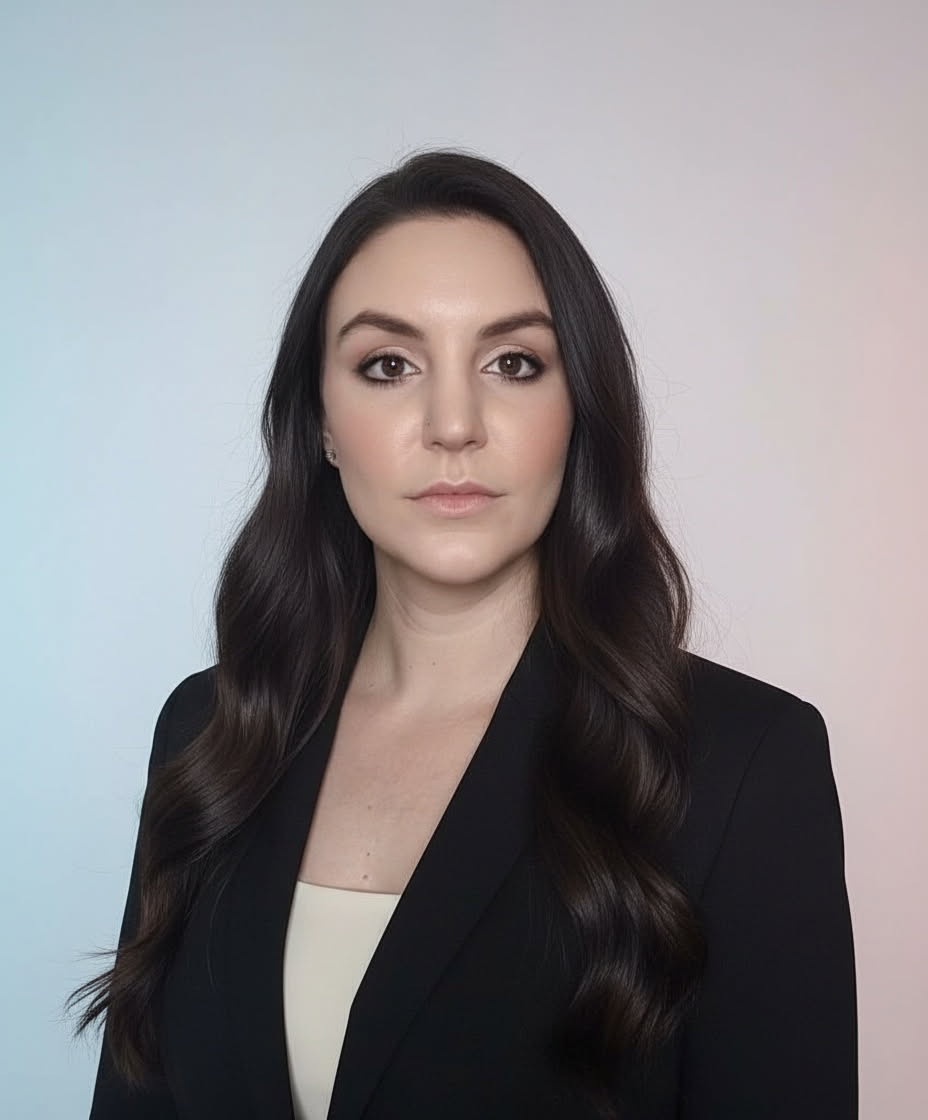
13 years specialising in SEO. Founder of Search Scope. I work directly with every client on strategy and execution. No account managers, no offshore teams, no templated retainers.
My work covers organic and national SEO, local SEO, Google Maps, GBP and GMC reinstatement, ecommerce SEO, technical audits, and AI search visibility. I work with established Australian businesses that want a senior specialist, not a service package.
4.9 stars across 30+ verified Google reviews. Read on Google Full client review archive
Honest answer upfront: we are not for everyone. AI citation is a partnership that compounds, not a plug-in. The strategy call is 30 minutes, if we are not a fit, we will tell you and point you somewhere that is.
30 minutes. No pitch deck. No proposal at the end unless you ask.
Investment depends on competition, site health and catalog complexity. The visibility check on the call is where we scope you specifically. Month-to-month, ex-GST, no lock-in.
The 30-minute visibility check answers the rest. Real data on the call. No pitch deck.
Book a free checkA 30-minute AI visibility check with the specialist who'll do the work, not a salesperson. We run your buyer questions live across ChatGPT, Perplexity, Gemini and Google AI, so you leave knowing exactly where you're invisible and what it takes to get cited.